How Long Does a Water Heater Last?
A hot shower on a cold Newark morning is one of life’s small joys. But if your water heater has other plans—ice-cold water pouring down instead of warmth—that joy quickly disappears. At that moment, one big question comes to mind: how long is the lifespan of a typical water heater in Newark homes?
Most homeowners don’t think about their water heater until it’s too late. But knowing the average lifespan, what shortens it, and how to extend it can help you plan ahead instead of facing a sudden (and chilly) surprise.
Why Lifespan Matters
The water heater might not get the same attention as a kitchen remodel or a new roof, but it’s just as critical. After all, it quietly works behind the scenes every day—heating water for showers, dishwashing, and laundry. Over the years, that constant use chips away at the lifespan of the unit.
When you understand what’s typical for your system, you can budget for replacement, catch problems early, and avoid waking up to a cold shower or flooded basement. In other words, knowing the lifespan saves both money and stress.
The Average Lifespan of Water Heaters in Newark homes
Not all water heaters are created equal.
The lifespan depends on the type of heater you have in your Newark home:
- Gas water heaters: Usually 8–12 years. They heat up quickly but tend to wear out more quickly.
- Electric water heaters: Around 10–15 years. They generally last longer than gas models but can be slower to heat.
- Tankless water heaters: 15–20 years or more. With proper care, these have the longest lifespan, though they cost more upfront.
Typically, the lifespan ranges from approximately 8 to 20 years. That’s a wide range, and where your unit lands often depends on how well it’s maintained and the water quality in Newark homes.
What Shortens a Water Heater’s Lifespan
Even the best unit won’t last forever.
But certain conditions in Newark homes can shave years off the lifespan:
- Hard water: Newark’s water can contain minerals like calcium and magnesium. Over time, these build up as sediment in the tank, straining the system.
- Skipping maintenance: Failing to flush the tank or check the anode rod invites corrosion and sediment buildup.
- Overuse: A small unit serving a big household is constantly overworked, cutting the lifespan short.
- Improper installation: Mistakes in setup, like poor venting, can stress the system from day one.
- Old age plus neglect: Once a water heater is over 10 years old, lack of maintenance accelerates decline quickly.
Think of it this way: you wouldn’t drive a car 100,000 miles without oil changes. The same principle applies to a water heater’s lifespan.
Warning Signs Your Water Heater Is Near the End
How do you know if your unit is nearing the end of its lifespan?
Here are the red flags to watch for:
- Water takes much longer to heat.
- Hot water runs out faster than it used to.
- Rumbling or banging noises from the tank.
- Rusty or discolored water.
- Leaks or puddles forming near the unit.
- Age—if it’s over 10 years old, the lifespan clock is ticking.
Catching these signs early gives you time to plan for replacement instead of dealing with an emergency.
How to Extend Your Water Heater’s Lifespan
The good news is you can stretch the lifespan of your unit with regular care.
Here’s how:
- Flush the tank once a year: This clears out sediment that makes the system work harder.
- Check the anode rod: Replace it every 3–5 years to fight corrosion.
- Insulate the tank and pipes: This helps reduce heat loss and strain on the system.
- Set the thermostat to 120°F: Hot enough for daily use, gentle enough to prevent scalding and lower wear.
- Schedule annual inspections: A professional can catch small problems before they shorten the lifespan.
These steps don’t take much time, but can add years to your system’s service life.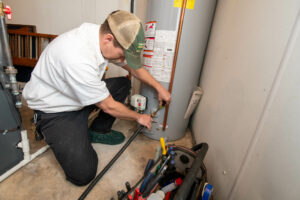
Planning for Replacement
Even with the best maintenance, every water heater has a finite lifespan. Planning ahead makes replacement less stressful.
- Know your unit’s age: If it’s past 10 years, start considering options.
- Research models early: Compare traditional tanks with tankless systems based on your home’s needs.
- Budget in advance: Replacement costs vary, but planning keeps it from being a financial shock.
- Look for energy-efficient models: Newer units not only extend lifespan but also save money on utility bills.
Replacing your unit on your terms—rather than after a midnight breakdown—is always the better choice.
Wrapping It Up
So, how long does a typical water heater last in Newark homes? The lifespan depends on the type: 8–12 years for gas, 10–15 years for electric, and up to 20 years for tankless. Local water quality, maintenance habits, and household demand all contribute to the longevity of your system.
Don’t wait until your water heater fails mid-shower to think about its lifespan. Pay attention to the warning signs, keep up with maintenance, and plan for replacement before emergencies strike. And when it’s time to act? You call. We come. It’s fixed. Fixed right the first time.