What to Actually Expect When Your House Gets Repiped
Most homeowners hear “repipe” and picture their walls in pieces, pipes and materials everywhere, no running water for a week, and a crew that treats their home like a job site. But the degree of disruption varies a lot, and most of it comes down to factors that are predictable before the first hole gets cut.
Here’s what the process actually looks like, and where things tend to go sideways.
The Real Source of Disruption Isn’t Noise
People assume the hardest part is the drilling and the dust. Those are real, but they’re not what throws a household into chaos. The deeper disruption is logistical, water shutoffs mid-morning, workers moving through every room, bathrooms offline for stretches, and that low-grade tension of your house not quite being yours for a few days.
In a typical single-family home, the job runs one to five days. A small, single story house with accessible plumbing can sometimes wrap in a day or two. A two-story with multiple bathrooms and pipes running through finished walls takes longer, and the daily inconvenience stacks up differently.
Most people stay home through it. A few leave for the weekend and come back to a finished job. Both approaches work, it depends on your tolerance and your bathroom situation.
Wall Access: Where It Gets Honest
If your pipes run through attic space or a crawlspace, you’re in good shape. That kind of access makes the job cleaner and faster, with much less disruption to your living spaces.
But when pipes run through interior walls, tile surrounds, or between floors, physical access is required. Drywall gets cut. Sometimes ceiling sections come out. It’s not damage, it’s how the work gets done, but it does mean your house will look rough for a few days before it looks right again.
Any contractor who promises a full repipe with zero wall openings should be pressed on that. It’s either a very unusual house, a very limited scope of work, or an answer designed to win the job.
Water Shutoffs: Plan Your Day Around Them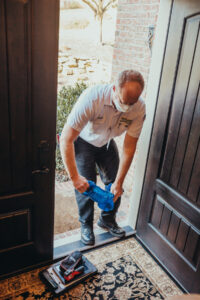
The water shutoff disruption is what most people find hardest to adapt to. During active work, the main gets shut off, sometimes for most of the working day. A competent crew restores it each evening. A disorganized one leaves you without water longer than necessary.
If you’ve got kids or someone working from home, this matters more than anything else about the job. Plan for it. Fill a few containers the night before. Know where the nearest coffee shop bathroom is. It sounds excessive until day two.
Families with a single bathroom need a backup plan for at least one day, a neighbor, a gym, a family member nearby. Multiple bathrooms make this easier, but even then, expect at least one of them to be offline for stretches.
Noise and Dust Are Real Don’t Underestimate the Dust
There’s drilling, sawing, and the occasional thud that makes you wonder what just happened above your head. It’s not constant, but it’s not subtle either.
The dust is the part that surprises people. Even with drop cloths and plastic sheeting, drywall cutting sends particles into places that seem physically impossible to reach. If you have allergies, close the HVAC vents in work areas and consider a portable air filter. Move anything you don’t want coated, electronics, open shelving, anything fabric near the work zone.
This level of disruption is temporary and manageable, but it’s easier if you expect it going in rather than discovering it mid job.
How Much the Crew Matters
A good crew makes the disruption feel contained. They protect floors, communicate what’s happening each day, clean up before they leave, and don’t treat your house like a staging area.
A bad crew, one that leaves debris everywhere, shuts off water without warning, or can’t tell you what they’re doing tomorrow, turns a manageable job into something that grinds on you. The technical skill matters, but so does basic job-site respect.
Before work starts, ask how they handle daily cleanup, they notify you before shutoffs, and what the patching plan is. The answers tell you a lot about how the job will actually run.
The Second Wave: Drywall, Texture, Paint
This is what catches people off guard. The plumbing portion wraps in a few days, but the disruption doesn’t end there. Patching holes, matching texture, repainting, that’s a separate process, sometimes handled by a different crew.
Some companies include patching in the scope. Some patch but don’t paint. Some hand you a list of holes and move on. Ask about this upfront, in writing, before any work begins. The gap between “repipe is done” and “house looks normal again” can be a week or more if repairs aren’t lined up in advance.
How to Prep For Repiping
Clear out cabinets under every sink. Move fragile items off walls near bathrooms, drilling transmits vibration further than people expect. If there’s a main hallway the crew will be walking through constantly, get the furniture out of it. Take down anything you’d be upset to see fall.
Contain pets. Open wall cavities are apparently irresistible to cats, and a cat inside a wall framing bay is exactly the kind of interruption no one needs.
FAQ
Can I stay in the house during a repipe?
Yes, in most cases. The disruption is real but livable for most households. The exception is single bathroom homes, where having a backup plan for at least one day makes a meaningful difference.
How long will the water actually be off each day?
Expect several hours during working hours. A well run crew restores water each evening. If the contractor can’t give you a general schedule for this, that’s worth noting.
Do they have to cut into my walls?
Usually, yes. The extent depends on where your pipes run. Attic and crawlspace access reduces wall cuts significantly. Pipes through finished walls or tile typically require more opening.
Should I ask about drywall repair before hiring?
Every time. Who patches, who paints, what’s included, get this in writing before the job starts. It’s one of the most common sources of post-job frustration.
What’s the one thing homeowners wish they’d done differently?
Most say they wish they’d cleared work areas more thoroughly and set up a water backup plan earlier. Small prep steps, but they reduce the daily friction considerably.
The peace of mind after a repipe, no more wondering about corroded lines, pressure drops, or mystery leaks. tends to make a few days of controlled chaos feel worth it. The disruption is real. It’s also finite. Knowing what to expect makes it much easier to get through.