You walked out to grab the trash bins and finally took a good look at that metal box on the side of your house. Orange-brown streaks running down the siding. Paint flaking off in chips. Maybe a soft spot at the bottom where the metal feels more like a stale cracker than steel.
If you live in one of the older neighborhoods off Capitol Trail or near the University of Delaware, this is a story I hear about twice a week. Brick ranchers from the 60s, split-levels from the 70s, those meter cans have been hanging on through a lot of Delaware winters.
So yes, rusted meter cans can be dangerous. Not all of them, and not in the way most homeowners assume.
What a Meter Can Is and Why Yours Is Probably Corroded
The meter can is the metal enclosure bolted to your house that holds the electric meter. Delmarva Power owns the meter itself. You own the can, the conduit, and everything attached to the structure. That ownership line surprises people every time.
Newark sits in a weird climate sweet spot for corrosion. Humid summers, freeze-thaw winters, and enough coastal salt drift from the Delaware Bay to do real damage over 20 or 30 years. Add road salt from Route 273 and I-95, and the bottom seam of an exterior steel enclosure starts losing the fight early.
I’ve pulled rusted meter cans off Newark homes where the back panel had basically turned to lace. Everything still worked. That’s the part that gets people in trouble.
When Surface Rust Is Fine and When It’s Not
Light surface rust on the face of the can the kind you can scrub off with a wire brush isn’t an emergency. A coat of rust-inhibiting primer like Rust-Oleum’s industrial enamel can buy you several more years if the metal underneath is solid.
The problem is interior corrosion. Once moisture gets past the gasket at the top or wicks up through a rotted bottom seam, it attacks the lugs where your service conductors land. Those connections carry 200 amps in most modern Newark homes. Corroded copper plus 200 amps equals heat, and heat in a sealed box equals trouble.
Honest caveat, I can’t always tell from the outside how bad it is inside. Sometimes a can that looks like garbage opens up clean.
The Real Warning Signs
Flickering lights when the AC kicks on. A buzzing sound near the meter that wasn’t there last year. Any burning smell, even faint that’s the one that should get you on the phone today.
A homeowner near Newark Country Club called me last spring because her dishwasher kept tripping the breaker. The dishwasher was fine. Her rusted meter can had a quarter-sized hole through the bottom, water had been pooling on the main lugs, and the resistance was causing voltage drops every time a major appliance ran.
Can a Rusted Meter Can Actually Start a Fire?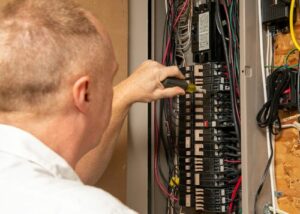
Yes. Not often, but yes. Corroded connections create electrical resistance, resistance creates heat, and heat inside a sealed enclosure full of plastic insulation and dry wood framing is exactly the recipe nobody wants. The risk jumps when corrosion eats through the weather seal at the top rainwater drips directly onto live 240V connections. Delaware gets around 45 inches of rain a year.
What Replacement Actually Costs
The cost of meter can replacement in Newark generally depends on amperage and whether the conduit and service entrance cable need replacing too. If the panel inside the house also needs work which happens more often than I’d like, you’re looking a full service upgrade.
Delmarva has to pull the meter and cut power before we can touch anything, and scheduling them is sometimes the slowest part. City of Newark requires a permit and inspection before power gets reconnected. A simple replacement wraps up in four to six hours.
What You Can Do First
Take a photo of your meter can in good daylight from three feet back, then a close-up of any rust. Corrosion moves slowly enough that you won’t notice changes by eye. Compare today’s photo to one from next spring if rust has spread visibly, that’s your answer.
Check the caulking where the conduit enters the top of the can. If you see daylight, gaps, or crumbling sealant, that’s the entry point for the water doing all the interior damage. You can re-caulk the exterior seam yourself with outdoor silicone just don’t open the can.
Walk around and check whether the can sits flush against the house. If you can wiggle the whole assembly, stop touching it. That movement means the lag bolts have rusted out behind the siding.
When to Stop Reading and Pick Up the Phone
Visible scorch marks, a burning smell, water inside the enclosure, or a meter can pulled away from the house those aren’t “get a few quotes” situations. Those are today situations.
I’ve watched homeowners try to patch a rusted meter can with roof flashing and silicone to save a few hundred bucks. Works for about a season. Then the interior corrosion finishes what it started, and instead of a meter can replacement they’re looking at a full service entrance rebuild, and that’s not something everyone is prepared for.
FAQs
How do I know if my meter can is mine or the power company’s?
The meter belongs to Delmarva Power. Everything else the can, the conduit, the connection point on your house is yours. Most Newark homeowners find out the hard way when something fails.
Can I just paint over the rust?
On light surface rust, a wire brush and rust-converter primer will slow things down. On heavy corrosion or anything with holes, paint is lipstick on a pig. The damage underneath keeps spreading whether you can see it or not.
Does my homeowner’s insurance cover meter can damage?
Usually not for gradual corrosion insurance treats that as wear and maintenance. Storm damage is different. Check your policy.
How often should I get this looked at?
For Newark homes built before 1985, every five to seven years for a quick exterior check, sooner if you’re seeing visible rust. The humidity here is harder on outdoor electrical equipment than people realize.
Will Delmarva tell me if my meter can is bad?
Sometimes. Their meter readers will tag a can that’s obviously failing, but they’re not inspecting it for you. Don’t wait for a red tag.
Is this a same-day repair?
Sometimes, if parts are standard and Delmarva can pull the meter quickly. More often it’s a 2 to 5 day turnaround once permits and utility coordination are factored in.
If you’ve been hoping that rusted box holds one more winter, it probably will. The question is whether the next one does.
