What Should I Do In An Electrical Emergency?
So, the lights are flickering, something smells like burnt plastic, or you just heard a weird pop from the breaker panel. You’ve already called an emergency electrician (good move), but now the tricky part is waiting. And while it might only be 30 minutes to an hour before help arrives, a lot can happen in that window.
What you do—or don’t do while you wait can make a big difference in keeping your home, family, and yourself safe.
Step One: Stay Calm, But Act Quickly
I know, “stay calm” is a cliché, but it’s essential. Panic makes people do risky things, like trying to fix the issue themselves. Remember, you called an emergency electrician for a reason. That said, don’t just sit on the couch scrolling through your phone. If there’s an immediate hazard, take care of it—safely.
Step Two: Cut the Power (If It’s Safe to Do So)
If you can pinpoint where the problem is say, a single outlet sparking or a light fixture buzzing turn off the breaker for that area. Better yet, if you suspect the whole system might be compromised, flip the main breaker. Of course, if your panel is smoking, sparking, or making ominous crackling noises, don’t touch it. That’s a job for the emergency electrician.
Step Three: Move People (and Pets) Away from Danger
Electrical issues are sneaky. Sometimes the real danger isn’t obvious hidden wiring in the walls could be overheating, or a live wire could be touching something it shouldn’t. If you smell burning, hear popping, or see smoke, get everyone (yes, that includes pets) to a safe area. Preferably, it should be somewhere outside or at least far from the suspected trouble spot.
Step Four: Avoid Using Water Near the Problem Area
This sounds obvious, but in the heat of the moment, people forget. Water conducts electricity. If you’ve got a leaking appliance, a flooded outlet, or even damp walls, keep your hands, mop, or shop vac far away until the emergency electrician arrives.
I once saw a neighbor try to “quickly” clean up water near their dishwasher during an outage. They got a nasty shock because the wiring was still live. Not worth it.
Step Five: Gather Useful Information for the Electrician
While you’re waiting, jot down details that could help speed up repairs.
- When did the problem start?
- What were you doing right before it happened?
- Has anything similar happened before?
This way, when your emergency electrician walks in, they’re not starting from scratch they’ve got a head start.
Step Six: Protect Valuable Electronics
If you haven’t already, unplug sensitive devices like computers, TVs, and gaming consoles. Even if the power’s out now, it might come back with a surge.
A friend of mine once lost an expensive gaming PC because a power surge hit right after an outage. The electrician fixed the wiring, but the electronics? Toast.
Step Seven: Keep an Eye (and Ear) on the Situation
Don’t just assume everything will stay stable until the emergency electrician gets there. If you notice more smoke, louder buzzing, or sudden heat from walls or outlets, be ready to evacuate and call the fire department. Electrical issues can escalate fast.
Step Eight: Resist the Urge to DIY
I know it’s tempting. Especially if you’ve “fixed” small electrical things before. But in emergencies, you’re dealing with unknowns damaged circuits, hidden fire hazards, or unstable connections.
Even if it looks simple, the wrong move could turn a small problem into a dangerous one. The whole point of calling an emergency electrician is to keep you out of that danger zone.
Step Nine: Prepare the Area for Quick Access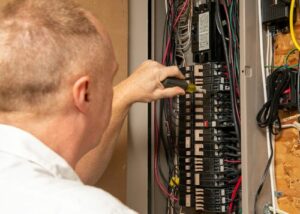
If you can do so safely, clear a path to your breaker panel, problem outlet, or damaged fixture. Remove furniture, rugs, or boxes that might slow down your emergency electrician when they arrive. The faster they can get to the source, the faster they can get you back to normal.
Step Ten: Have a Backup Plan
If the problem’s big like a total outage or damage from a lightning strike it might take more than one visit to fix. While you’re waiting, think ahead. Do you have a place to stay if repairs take all night? Can you store perishable food somewhere else? When you’re in the middle of an emergency, these details matter.
Final Thoughts: The Goal Is Safety, Not Speed
While it’s frustrating to wait, remember the goal isn’t to get your power back instantly—it’s to make sure it comes back safely. Every step you take before your emergency electrician arrives should reduce risk, not add to it.
In most cases, that means staying out of the danger zone, keeping others safe, and giving your electrician the info and access they need. Electrical problems have a way of making time slow down, but when that doorbell rings and your electrician walks in, you’ll be glad you spent those minutes wisely.