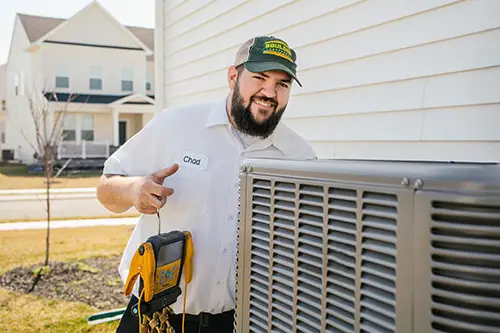
 Professional AC Installation Services In Hockessin
Have you ever come home on a hot July afternoon to find your house still feels like an oven? If your AC is struggling, running all day, or blowing warm air, you’re not imagining things.
Something is off.
Waiting usually just makes the problem worse and the bills higher. Fortunately, AC installation in Hockessin, DE can fix all of that.
A new, properly sized system keeps every room comfortable while actually lowering your monthly energy costs. Modern air conditioning units use far less electricity than older models, so you get better cooling performance without watching your utility bill climb.
I’ll walk you through the key signs it’s time for a new system, the types of units you can choose from, and why Boulden Brothers is the team Hockessin homeowners trust. I’ll keep it simple and practical so you can make the right call for your home.
Key Takeaways
- Modern AC units use far less electricity than older models while delivering superior cooling performance and reducing energy costs.
- Replace your AC system if it is over 10 to 15 years old, experiences frequent breakdowns, or causes rising energy bills.
- Central air conditioners, ductless mini-split systems, and window air conditioners each offer different benefits matching specific cooling needs and home layouts.
- Ductless mini-split systems connect up to five indoor units to one outdoor unit, enabling independent temperature control in separate zones.
- Boulden Brothers provides nearly 80 years of trusted AC installation expertise since 1946 with upfront pricing and thousands of five-star customer reviews.
Top Signs You Need An AC Replacement in Hockessin
Your air conditioning system works hard every summer to keep your home comfortable. Knowing when to replace it rather than repair it can save you a lot of money and a lot of stress.
- Your AC system is over 10 to 15 years old and runs less efficiently than it once did. Older units consume more energy to produce the same cooling results, which drives up your utility bills every month.
There’s an important detail many homeowners miss here. According to the EPA’s phase-out guidelines for R-22 refrigerant, systems installed before 2010 almost certainly use R-22 Freon, which the EPA completely phased out of production and importation in 2020. If your aging system starts leaking refrigerant, recharging it is now extremely expensive, and it may soon become impossible to service at all. For units in this age range, replacement is often the only practical path forward. - Frequent breakdowns and repairs signal that your system is nearing the end of its life. Calling for repairs more and more often costs you money each and every time.
Recurring repair costs can spiral quickly. One Hockessin homeowner faced repeated compressor issues over 18 months, racking up four service calls for short cycling, one compressor replacement, and two refrigerant recharges that totaled $2,650 in repair expenses. Analysis showed that thermal stress from an undersized condenser caused the repeated failures. After replacing the entire system, reliable cooling returned and the cycle of mounting bills finally ended.
To put that number in perspective, according to 2026 home service data compiled by Modernize, the average national cost to replace a complete HVAC system ranges from $11,590 to $14,100. When you’re already spending thousands on a failing unit, the repair-versus-replace math starts to look very different.
- Rising energy bills without explanation can point to serious efficiency loss in your unit. Your cooling costs keep climbing even though your habits and thermostat settings haven’t changed.
A local 2,100 square foot home showed this pattern clearly before replacement. The 13-year-old system drove monthly cooling bills to $240 while leaving three rooms consistently above 76 degrees during peak hours. After professional installation of a properly sized 16 SEER central unit with duct sealing, the monthly bill dropped to $155 and all rooms stayed within 1.5 degrees of the setpoint. Measured airflow improved by 28 percent. The homeowner said it best: “After the new system and duct sealing the house stayed cool and our bills dropped noticeably, even on the hottest days.”
- Inconsistent temperatures throughout your home suggest issues with air distribution or system strain. Some rooms feel cold while others stay warm, making your thermostat settings feel pointless.
- Excessive noise like rattling or grinding points to mechanical failures inside your AC unit. These sounds mean internal parts are wearing out and need professional attention soon.
- Reduced airflow or warm air from your vents can indicate compressor or airflow problems. You notice weak output despite your thermostat being set to cool.
- Short cycling or extended run times are signs of inefficiency or system strain. Your AC turns on and off frequently or runs constantly without properly cooling your home.
- Unpleasant odors like musty or burning smells may signal mold growth or electrical issues. These require prompt professional inspection to prevent health risks or safety hazards.
Types of Air Conditioning Systems Available for Installation
You have several solid options to choose from when installing a new system in your home. Each type offers different benefits that match your specific cooling needs and home layout.
Central Air Conditioners
Central air conditioners cool your entire home efficiently and consistently. These systems come in two main types: split-system units and packaged units. Split-system units have separate outdoor and indoor components, while packaged units combine everything into a single outdoor cabinet for simpler installation.
Energy-efficient models with higher SEER ratings reduce energy consumption and cut your utility costs over time. Here’s something worth knowing before you shop. According to the U.S. Department of Energy’s updated SEER2 regional requirements, Delaware falls under the Southeast climate region. That means any new split-system central air conditioner installed in your home must legally meet a minimum efficiency rating of 14.3 SEER2 for systems under 45,000 BTU. A contractor offering a low-bid deal on outdated equipment won’t meet this standard, so it’s worth asking upfront.
Advanced models operate quietly, keeping your home peaceful and comfortable throughout the day. Accurate sizing and properly sealed, insulated ductwork are critical for getting the best performance from your system.
Before installation begins, professionals inspect your ductwork for leaks or blockages that could reduce performance. This step ensures your new air conditioning system delivers cool air to every room at peak efficiency.
Ductless Mini-Split Systems
Unlike central air conditioners, ductless mini-split systems take a completely different approach to cooling your space. These systems skip the ducts entirely and deliver conditioned air directly where you need it most.
That matters more than most homeowners realize. According to the EPA’s ENERGY STAR program, typical homes lose between 20 to 30 percent of the air moving through central duct systems due to leaks, holes, and poor connections in unconditioned spaces like attics and crawlspaces. A mini-split bypasses all of that wasted energy from the start.
Your ductless setup includes an outdoor compressor and condenser unit paired with one or more indoor air-handling units. Your system can connect up to five indoor units to a single outdoor unit. This means you control the temperature in each zone independently. That zoned temperature control lets you cool specific rooms without wasting energy on spaces you are not using.
Rooms with additions, spaces without existing ducts, or areas where full ductwork would cost too much all become practical cooling zones with mini-split technology.
“Ductless mini-splits represent one of the most flexible and efficient cooling options available for modern homes today.”
Installation projects in Hockessin back this up. Three homes with room additions lacking existing ducts received mini-split installations that averaged 6.5 hours per home. Drywall penetrations stayed limited to two 3-inch holes per installation. Each room gained thermostat independence for precise control, and projected seasonal energy savings reached 18 percent compared to extending a central system to cover those same zones. As technicians observed during testing, “Mini-splits cut installation time and let each room run only when it needs cooling.”
Your ductless mini-split can even function as a heat pump, providing both heating and cooling in a single, compact unit that serves your home year-round.
Window Air Conditioners
If you want a budget-friendly cooling option without complex installation, window air conditioners are worth a serious look. These compact units fit directly into your window frame and give you targeted cooling for single rooms without the cost of ductwork or a full professional setup.
Installation takes just minutes, and you can remove or replace the unit whenever you need to.
Window air conditioners have come a long way since their invention in 1931 and commercial launch in 1932. By 1947, 43,000 units had been sold across America. Today’s models consume roughly 50% less energy compared to those manufactured in 1990, and the technology keeps improving.
According to the U.S. Department of Energy’s May 2026 efficiency standards for room air conditioners, new regulations took effect on May 26, 2026, significantly raising the minimum Combined Energy Efficiency Ratio (CEER). These standards are expected to save consumers an estimated $1.5 billion annually. The newest units hitting the market right now are the most efficient, and the most affordable to operate, in history.
Your energy bills drop noticeably with a modern window unit, making it a practical choice for homeowners who need cost-effective cooling in specific areas. Ongoing research continues to reduce energy consumption further and phase out harmful refrigerants, so your future cooling options will only get better and more environmentally friendly.
Why Choose Boulden Brothers For Your AC Installation in Hockessin, DE?
Boulden Brothers stands out as a top choice for professional AC installation services in Hockessin because the company brings nearly 80 years of trusted expertise to every job.
Since 1946, this family-owned and operated business has served the Hockessin community with clean, screened, and trained technicians who arrive exactly when promised. Based on their official Better Business Bureau (BBB) accreditation profile, Boulden Brothers has held active BBB accreditation since May 2000. That’s more than two decades of verified, third-party accountability in an industry where trust really counts.
You receive upfront, no-surprise pricing before any work starts. Here’s what a typical installation package looks like:
Item | Cost |
|---|---|
Equipment (16 SEER split system) | $5,200 |
Labor and standard materials | $1,850 |
Duct inspection and sealing | $450 |
Disposal and permit fees | $400 |
Package Total | $7,900 |
Financing options can spread these costs across 60 months, with estimated monthly payments around $145. This transparent approach removes guesswork so you can plan your investment with confidence.
Thousands of five-star customer reviews show that homeowners consistently experience high satisfaction with Boulden Brothers’ work quality and customer service. Your investment is protected through satisfaction guarantees and a commitment to fix any installation issues that come up after the job is done.
VIP service plan members enjoy priority scheduling and free checkups, keeping your system in peak shape year-round. Boulden Brothers also actively supports local families in need through community initiatives, so your choice to hire them strengthens Hockessin itself.
You get professional AC installation in Hockessin paired with genuine care for your home comfort and your neighborhood’s wellbeing.
F.A.Q.’s – AC Install in Hockessin
1. What does professional AC installation in Hockessin include?
A certified tech will check your home’s cooling needs with a load calculation, recommend the right unit size, and handle the installation. They’ll also test the system to make sure everything runs smoothly.
2. How long does AC installation take in Hockessin?
Most residential installations take four to eight hours. Jobs that include ductwork modifications or electrical panel upgrades may need additional time.
3. Why should I hire a professional for AC installation in Hockessin?
A licensed tech installs your system correctly and protects your manufacturer’s warranty. Many AC brands require professional installation to keep the warranty valid. Poor installation can lead to higher energy bills and frequent breakdowns.
4. How do I know which AC unit is right for my Hockessin home?
Your tech will measure your space, check your ductwork, and calculate the right tonnage for your cooling needs. This makes sure you get a unit that keeps you comfortable without wasting energy.