How a New Furnace Can Improve Indoor Air Quality
I’ve stood in a lot of basements over the years. Some clean, some… let’s say “well-lived-in.” And I’ll tell you this straight: the condition of a furnace has a lot more to do with the air you breathe than most people think.
Swap out an aging unit for a new furnace, and the difference shows up in places you didn’t expect. Your nose notices first. Your lungs second. Sometimes your allergies wave a little white flag.
You may have some questions about how a new furnace can help improve air quality, so let’s talk shop for a minute. No sales pitch. Just how a new furnace actually improves indoor air quality, from someone who’s watched it happen house after house.
Old furnaces quietly mess with your air
Older furnaces have history. Years of dust slipping past tired seals. Heat exchangers that have seen better days. Blowers that move air, sure, but they don’t do it cleanly.
I remember a job last winter. The homeowner complained about “that dusty smell” every time the heat kicked on. We pulled the old unit apart and, honestly, it looked like it had been storing pet hair as a hobby. No filter in the world could fix what was happening inside that cabinet.
A new furnace starts fresh. Tight tolerances. Clean surfaces. Modern airflow design. That alone changes the air moving through your home.
Better filtration starts at the furnace
This is where the improvement gets obvious fast. Modern furnaces support high-efficiency filters that older systems choke on. Thicker media, better particle capture, less air bypass. Dust, pollen, dander, even fine debris get trapped before they ever make a lap around the house.
With a new furnace, air passes through the filter the way it’s supposed to. No whistling gaps. No shortcuts. Just clean airflow doing its job. I’ve had homeowners call back a week after install and say, “Is it weird that I’m dusting less?” Nope. That’s the point.
Sealed combustion keeps the bad stuff out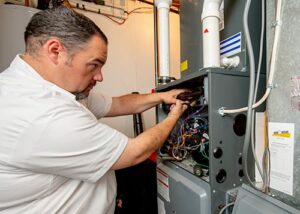
Older furnaces often pull combustion air from inside the home. That can drag in dust, moisture, and who knows what from crawl spaces or basements.
A new furnace uses sealed combustion. It pulls air from outside and vents exhaust straight back out. Clean separation. No mixing. No backdraft surprises.
That means fewer combustion byproducts floating around your living space. Less irritation. Less stale air feeling heavy on your chest. And yes, safer too. I know that matters, but today we’re sticking to air quality.
Steadier airflow means fewer hot, dirty bursts
You’ve felt it before. The furnace kicks on and blasts hot air like it’s mad at the house. That rush stirs up settled dust and sends it airborne.
Variable-speed blowers in a new furnace don’t behave like that. They ramp up slowly. They move air consistently. Think steady river instead of flash flood.
That smoother airflow keeps particles from getting kicked up again and again. It also helps the filter do its thing longer, without clogging early.
Humidity control finally makes sense
Dry air makes everything worse. Sinuses. Skin. Static shocks that make you flinch every time you touch a light switch. Many new furnace systems integrate better with humidifiers and control boards that actually talk to each other. No guesswork. No wild swings.
Balanced humidity keeps airborne particles heavier, so they settle instead of floating around looking for trouble. I’ll admit, I used to downplay humidity. Then I saw how many “air quality” complaints vanished once it was dialed in.
Cleaner duct interactions
Here’s something people don’t expect. When a furnace struggles, it pulls harder on ductwork. Leaks get worse. Dust from attics and wall cavities sneaks in.
A new furnace operates within proper pressure ranges. Duct leaks still matter, but they don’t get exaggerated by an overworked blower. That alone can cut down on mystery dust that shows up no matter how much you clean.
Less odor cycling through the house
Old systems recycle smells. Cooking odors. Pet smells. Basement funk. They linger because the system can’t flush air effectively.
With a new furnace, airflow patterns improve. Filtration improves. Odors fade faster instead of camping out. One homeowner joked, “I guess I don’t need candles in every room now.” That’s a win.
Reliability matters for air quality, too
A furnace that short-cycles or shuts down randomly doesn’t keep air moving properly. Stagnant air leads to moisture pockets and stale smells. A new furnace runs predictably. Clean cycles. Clean starts. Clean stops.
You call. We come. It’s fixed. That mindset applies to installs too. When a system runs right from day one, the air follows suit.
FAQ: New furnace and indoor air quality
Does a new furnace remove allergens from the air?
It helps a lot. With modern filtration and smoother airflow, allergens like pollen and dander are trapped rather than recirculated.
Will a new furnace fix dust problems completely?
No system erases dust forever. A new furnace reduces how much gets airborne and how often it spreads.
Is indoor air quality better right away after installation?
Usually, yes. Many homeowners notice fewer odors and less dryness within days.
Do I still need air purifiers with a new furnace?
Sometimes. A new furnace forms a strong foundation, and add-ons can build on that if sensitivities run high.
How often should filters be changed on a new furnace?
More often than people think. High-efficiency filters do more work, so regular changes keep air clean and airflow smooth.
One last thought from the field
I’ve installed plenty of furnaces that heat homes just fine. The memorable ones? Those are the jobs where the homeowner calls later and says, “The house feels better.” That’s air quality talking.
A new furnace doesn’t wave a flag or make a big announcement. It just quietly stops stirring up junk you shouldn’t be breathing and starts moving cleaner air, the way a system should.
Fixed right the first time. And honestly, once you experience that difference, it’s hard to go back.